Welcoming our new Senior Volunteers
We're delighted to welcome Richard Amos, Dr Mohammad Al-Amir and Prof Chirs Hopkins to their new roles within IPEM's senior volunteer leadership.
These roles are vital to our continued commitment to professional leadership, collaboration and scientific excellence across the diverse disciplines we represent.
Richard A. Amos, CPhys, CSci, FIPEM
Vice President International

Richard is Hon. Professor and Lead for Translational Particle Therapy Physics at University College London (UCL) and former Consultant and Lead for Proton Therapy Physics at UCL Hospitals NHS Foundation Trust.
After training at the Royal Free Hospital in London many years ago, Richard worked as a radiotherapy physicist in the UK, Canada, and the USA. For the last 25 years Richard has specialized in proton therapy physics at Loma Linda University Medical Center in California, home of the world’s first hospital-based proton therapy facility, the University of Texas MD Anderson Cancer Center in Houston, and at UCL and UCL Hospital in London. Richard’s career in medical physics has included a balance of clinical practice, academic research, and education, and he is passionate about all of these.
Richard is very active in the American Association of Physicists in Medicine (AAPM), the European Federation of Organisations for Medical Physics (EFOMP), and the international Particle Therapy Cooperative Group (PTCOG). His career has an international footprint in terms of research collaboration and education with growing interest and activities focused on education for low- to middle-income countries (LMIC), and Richard hopes to bring these experiences to his new role of VP International for the Institute of Physics and Engineering in Medicine (IPEM).
Richard is married with three teenagers, guaranteeing very little spare time exists outside of family and work. However, when time permits, he enjoys travelling and reading. He is delighted to be taking on his new role serving as the IPEM VP International.
Dr Mohammad Al-Amri
Vice President Academic
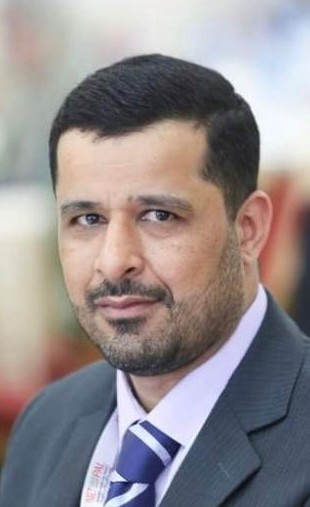
Dr Mohammad Al-Amri is a Reader in Clinical Movement Analysis and Rehabilitation Engineering at Cardiff University, where he is also Impact, Innovation and Enterprise Lead for the School of Healthcare Sciences and a University Senator. He leads the Sensor Physiotherapy INtervention (SPIN) Research Group, developing digital health solutions using wearable sensors and virtual reality technologies to improve rehabilitation and patient outcomes. His work is driven by a commitment to ensuring that innovation translates into meaningful benefits for patients and healthcare services.
Mohammad has held several leadership roles within academia and professional organisations, including serving as an IPEM Trustee and Board Director, where he directed the Science, Technology and Engineering Research and Innovation Council (STERIC), championing cross-disciplinary collaboration, and support for early-career researchers. He also contributes to national funding and peer-review activities, including panels for NIHR and Arthritis UK, and has built collaborations across universities, healthcare organisations, and industry to support research, innovation and knowledge exchange.
A passionate advocate for researcher development, Mohammad serves as Academic Core Training Lead for the GW4 BioMed2 MRC Doctoral Training Partnership across the Universities of Bath, Bristol, Cardiff and Exeter. He particularly enjoys supporting students and early-career researchers as they develop the skills, confidence and opportunities needed to build successful academic and professional careers. He is also passionate about the role professional bodies play in nurturing future talent and strengthening academic communities.
As Vice-President (Academic), Mohammad aims to strengthen academic engagement across the profession, champion educational excellence and support the next generation of medical physicists, clinical engineers, and healthcare scientists. He is particularly interested in developing future talent, strengthening academic careers, and helping ensure the profession continues to attract talented people, foster innovation and deliver lasting benefits for patients and society.
Professor Chris Hopkins
Director Science, Technology and Engineering Committee
Trustee
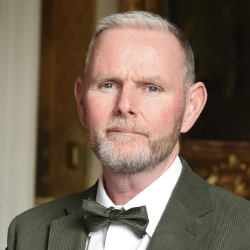
As Director of the Science, Technology and Engineering Committee, Professor Hopkins will provide strategic leadership for one of IPEM’s key professional committees, helping to shape the Institute’s scientific agenda and ensuring that medical physics, clinical engineering and healthcare science continue to influence the future direction of healthcare. In his role as Trustee, he will also contribute to the overall governance and long-term strategic development of the Institute.
Commenting on his appointment, Professor Hopkins said:
“It is a tremendous honour to be appointed as Director of the Science, Technology and Engineering Committee and as a Trustee of IPEM. Having been involved with the Institute for many years, I have seen first hand its leadership in advancing science, engineering and technology in healthcare. I am privileged to help shape its future direction and look forward to working with colleagues to strengthen our professions and improve health and wellbeing through science, research and innovation.”
Healthcare is undergoing profound transformation, with scientific and technological innovation becoming increasingly central to delivering safer, more effective and more personalised care. I look forward to working with colleagues across IPEM and our wider professional community to strengthen our disciplines, support the next generation of technologists, scientists and engineers, and ensure that our professions continue to make a lasting impact on patient care across the UK.”
Professor Hopkins has held a number of senior national leadership positions and has been a strong advocate for the healthcare science profession, working across professional bodies, the NHS and government to improve patient outcomes and maximise the contribution of scientific expertise.