
You can find our full list of Magnetic Resonance workforce resources here.
Workforce Resources
Workforce Intelligence
There are currently no live workforce surveys. If you would like to be involved in future workforce surveying, please contact nina@ipem.ac.uk
What does our workforce surveying programme involve?
IPEM regularly surveys the Medical Physics and Clinical Engineering professions to gather workforce data. High-quality data is vital to ensuring the right decisions are made on issues such as training, recruitment, staffing, and services. Workforce data can include:
- Number of staff in post
- Number of vacant posts
- Recommended number of staff
- Number of trainees, and other information on training pipelines
- Other information of specific interest to individual disciplines
Why do we need accurate workforce data?
The information we collect is used to:
- Advise on policy.
- Decision makers such as the NHS across the devolved nations, and the National Shortage Occupation List, rely on our data to inform future workforce planning. Data is often required at short notice.
- Inform our members.
- IPEM members use our workforce reports to help them influence local, regional, or national decisions.
- Shape IPEM’s own work.
- Our workforce surveying improves our knowledge and understanding of the sector and informs priorities for our policy and advocacy work.
There are currently no live workforce surveys. If you have further questions about our workforce surveys, or would like to be involved in future work, please contact nina@ipem.ac.uk.
| Discipline | Frequency of Surveys |
Year of Previous Survey |
Next Survey Launch |
Results Released |
|---|---|---|---|---|
|
|
4 years | 2022 | Summer 2029 | Autumn 2026 |
|
You can find our full list of Radiotherapy workforce resources here. |
2 years | 2023 | Winter 2028 | Autumn 2026 |
|
You can find our full list of Nuclear Medicine workforce resources here. |
4 years | 2023 | Spring 2027 | Autumn 2027 |
|
You can find our full list of DR and RP workforce resources here. |
2 years | 2024 | Summer 2027 | Winter 2028 |
|
You can find our full list of UNIR workforce resources here. |
4 years | 2022/3 | Autumn 2027 | Spring 2028 |
|
You can find our full list of Rehabilitation Engineering workforce resources here. |
4 years | 2022 | Winter 2028 | Autumn 2028 |
|
You can find our full list of Clinical Engineering workforce resources here. |
4 years | 2024 | Autumn 2028 | Summer 2029 |
How is access to the data controlled?
All information collected is treated in strict compliance with the Data Protection Act. We also recognise other confidentiality issues. Some of our information is being made available to IPEM members only, at least in the first instance. You can view our Data Usage Policy here.
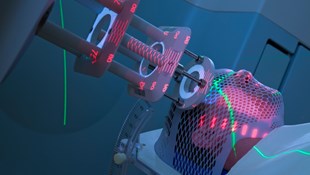
Radiotherapy
Radiotherapy is the treatment of cancer with ionising radiation, and can be used as the main form of treatment instead of surgery or in conjunction with the surgical removal of tumours. It is also used in combination with chemotherapy in an attempt to maximise the effect on the tumour tissue.

Nuclear Medicine
Nuclear medicine is the use of radioactive substances for treating, diagnosing, and monitoring the effects of therapies for cancer patients, and investigating various other medical conditions including heart and kidney disease. Both treatments and diagnoses involve administering radiopharmaceuticals.
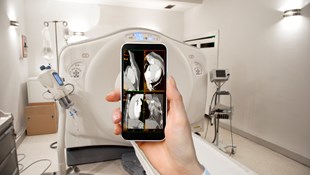
Diagnostic Radiology and Radiation Protection
Diagnostic radiology is a method of finding out what is wrong with a patient by seeing through the affected part of their body using X-rays. Radiation Protection is the name given to work that ensures any exposure to ionising and non-ionising radiation is reduced as low as reasonably practicable.
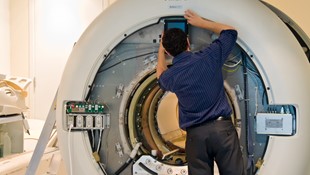
Clinical Engineering
Clinical Engineering refers to the development, use, on-going support, and maintenance of technology for diagnosing, aiding or treating patients. It covers a very wide range of devices used in healthcare.

Rehabilitation Engineering
Rehabilitation engineering is the clinical application of engineering to provide services, research, and development to assist people with disabilities. In general, assistive devices are used as aids to mobility and communication.

Magnetic Resonance
Magnetic resonance imaging (MRI) is a form of medical imaging that produces high quality pictures of tissues and organs within the human body without subjecting patients to harmful radiation.
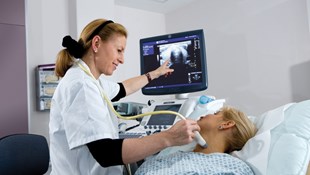
Ultrasound and Non-ionising Radiation
Non-ionising radiation (NIR) is a term used to encompass all electromagnetic radiation where individual photons do not have enough energy to ionise atoms. Medical Ultrasound, the use of high frequency sound waves, is also non-ionising.

Clinical Computing
Computers are an important and integral part of many areas of modern clinical activity. Computer-based medical devices are used in fields such as digital radiology, radiotherapy planning and delivery, nuclear medicine and physiological measurement.

Other Workforce Resources
Miscellaneous workforce resources such as the Workforce Intelligence baseline report, guidance on topics such as ESR, the national shortage occupation list and the impact of Brexit.
Workforce Requests
If you wish to request specific data from the workforce intelligence team that cannot be found in the workforce intelligence resources, click below to submit a request.
